Every Floridian understands the unpredictability of storm season. For decades, residents along the Gulf Coast and across Central Florida enjoyed a sense of calm, often watching major tropical systems steer toward the Atlantic or track straight through South Florida. Because areas like Miami-Dade and Broward counties fall under Florida’s strict High-Velocity Hurricane Zone (HVHZ) building mandates, many people in the greater Tampa Bay area kept their guard down, assuming inland and bay communities did not share the same level of risk.
Shifting weather patterns, rising storm intensities, and expanding wind fields have rewritten that assumption. From Riverview and Brandon to Apollo Beach, Lakeland, and throughout our 150-mile service radius, wind protection is no longer an afterthought—it is essential.
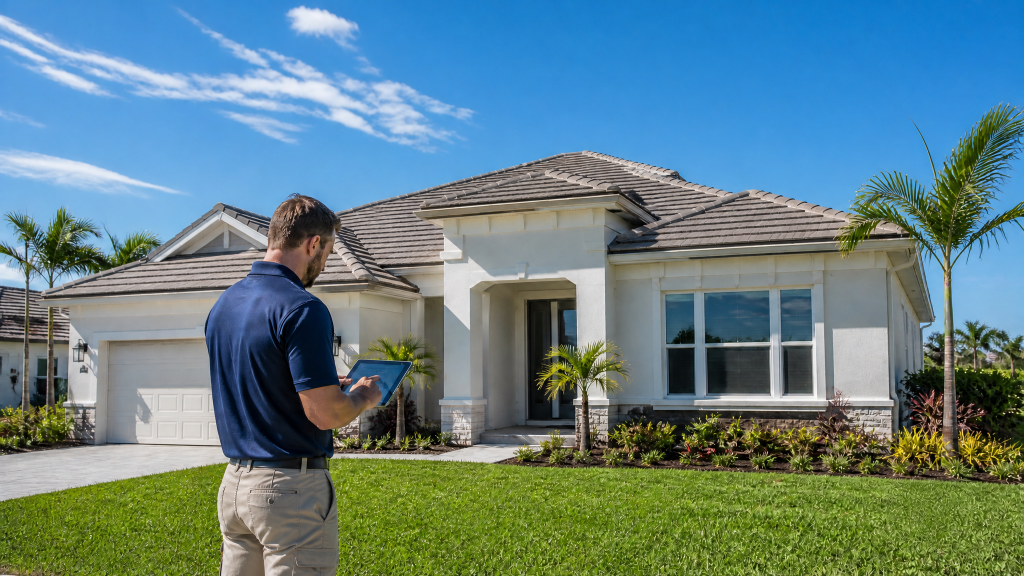
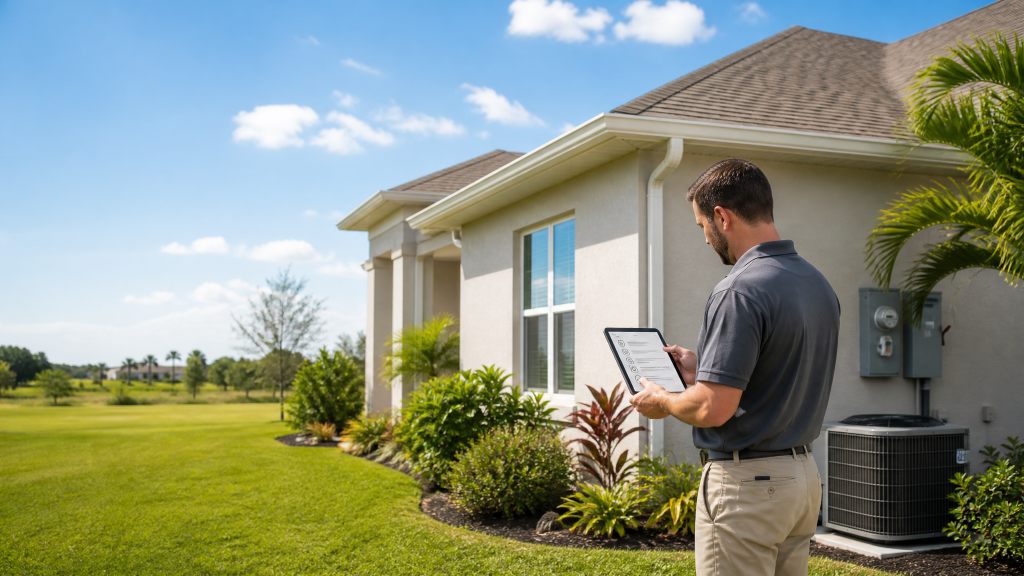
When property owners look to fortify their properties, working with the best home inspectors to complete an official wind mitigation inspection is one of the smartest financial moves they can make. At EA Drone & Home Inspections, our goal is to deliver clear, unbiased reporting so you know exactly how your home stands up to severe weather while potentially unlocking significant insurance discounts.
The Lesson from South Florida’s HVHZ
In the aftermath of Hurricane Andrew, Miami-Dade and Broward counties established the High-Velocity Hurricane Zone within the Florida Building Code, requiring impact-rated openings, reinforced roof decks, and specialized strapping systems. For years, homeowners in Hillsborough, Pinellas, and Pasco counties viewed those building methods as exclusive to South Florida.
Recent storm seasons have proven that extreme gusts, spin-off tornadoes, and relentless wind-driven rain do not halt at county lines. Homes in Riverview and surrounding Central Florida communities are facing wind events that test every seam of a roof and every window frame. Evaluating your home against these resilient construction principles is not just about keeping pace with codes; it is about ensuring your roof stays attached when high winds sweep across Tampa Bay.
The Story of a Riverview Family: Turning Uncertainty Into Protection
Consider Mark and Elena, a couple who recently purchased a charming 1990s ranch-style home in Riverview. Between moving expenses and closing costs, their budget was tight, and their initial homeowners insurance quote came in substantially higher than anticipated.
Rather than skipping optional assessments, they searched for a top-rated, certified home inspector in Riverview to perform a wind mitigation inspection.
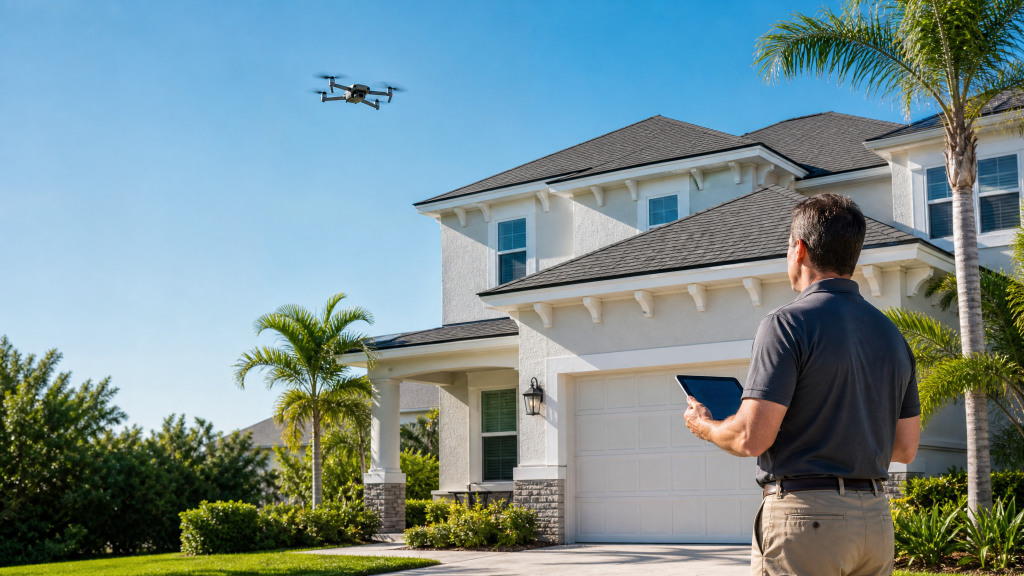
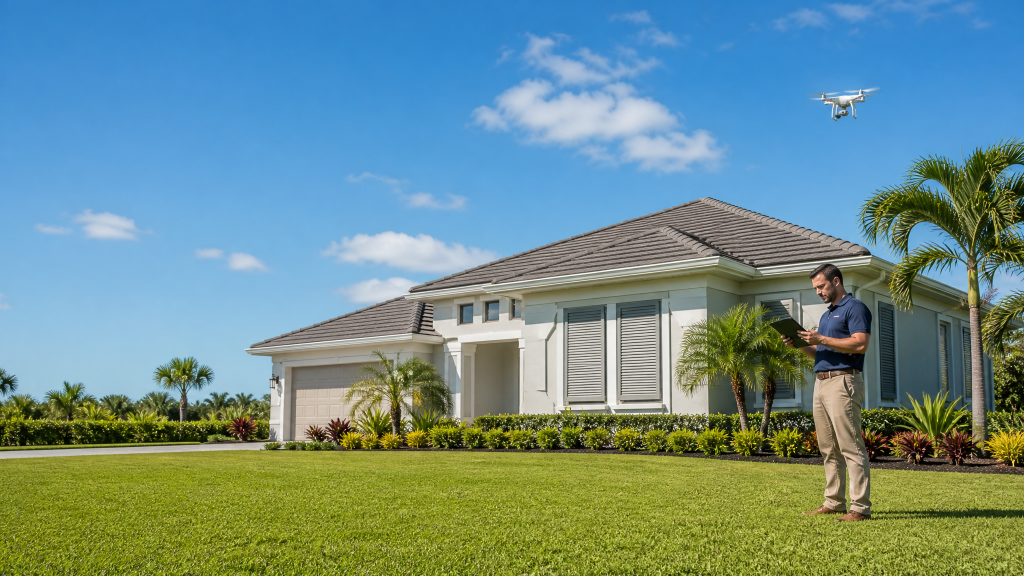
Using advanced aerial technology, EA Drone & Home Inspections safely captured high-resolution imagery of the roof geometry, decking fasteners, and water barriers without walking directly on brittle shingles. During the attic inspection, our team documented hurricane clips anchoring the rafters to the exterior masonry walls.
Mark and Elena submitted the completed Florida OIR-B1-1802 inspection form directly to their insurance provider. Because the home verified qualifying roof-to-wall ties and hip roof geometry, their carrier applied substantial windstorm mitigation credits. The savings lowered their annual premium by hundreds of dollars, allowing the inspection to pay for itself within just a few months.
More importantly, Mark and Elena gained the priceless peace of mind that their roof structure was securely fastened to shield their young children through the next storm.
Where the Savings Come From: Key Mitigation Features
Under Florida law, insurance carriers are required to offer premium discounts for construction features that reduce wind damage. During an assessment, the best home inspectors evaluate several vital components:
Roof Geometry: Hip roofs (resembling a pyramid sloping down on all four sides) perform exceptionally well against high winds and often qualify for the highest premium discounts.

Roof-to-Wall Attachment: Secure metal clips, single wraps, or double wraps fastening trusses to wall studs provide far superior uplift resistance compared to basic toenails.

Roof Decking Attachment: The length, type, and spacing of nails securing the plywood or OSB deck directly influence how well the roof resists separation during pressure drops.

Secondary Water Resistance (SWR): A self-adhering polymer modified bitumen underlayment seals the wood deck joints beneath your shingles, keeping driving rain out even if shingles blow off.

Opening Protection: Impact-rated windows, certified storm shutters, and wind-rated garage doors prevent sudden pressure changes that can lift a roof structure.
An Investment That Yields Knowledge and Value
If your property possesses qualified hurricane features, the resulting premium credits can recover the inspection fee in short order, recurring year after year.
However, even if an inspection reveals that your home lacks certain verifiable ties or older shutters do not carry active product approvals, the evaluation remains invaluable. Gaining an objective, photographic inventory of your structural weaknesses lets you plan targeted, cost-effective retrofits on your own schedule—long before an active weather advisory is issued for Tampa Bay. Your home is your most significant financial asset; understanding its physical condition is priceless.
Choose Riverview’s Trusted Inspection Specialists
Whether you are shopping for a home, preparing for an upcoming policy renewal, or comparing local quotes on Google and Thumbtack, you need an inspector who pairs local Florida expertise with modern diagnostic tools.
EA Drone & Home Inspections provides comprehensive, prompt, and accurate wind mitigation reports across Riverview, Tampa, St. Petersburg, and the entire 150-mile Central Florida region. Fill out the Scheduler, the call-back and consultation is always free, so is the drone footage.
Schedule your inspection today to uncover your home’s true storm preparedness and ensure you are capturing every insurance discount you have earned.